


Introduction
The pace of technological evolution in 2026 is unprecedented, reshaping the way we live, work, and interact with the world. Innovations in artificial intelligence, quantum computing, biotechnology, and advanced materials are no longer futuristic concepts—they are actively transforming industries and driving new possibilities.
Importance of Staying Updated on Next-Gen Technology
In this rapidly changing landscape, staying updated on next-generation technologies is not just an advantage; it is essential for individuals, businesses, and policymakers seeking to remain competitive and relevant. Awareness of emerging tools and trends enables informed decision-making, fosters innovation, and positions organizations to leverage new opportunities effectively.
Key Industries Impacted by Technological Advancements
Healthcare
AI-driven diagnostics, personalized medicine, and robotic-assisted surgery are redefining patient care and improving outcomes at unprecedented speeds.
Finance
Decentralized finance, blockchain solutions, and algorithmic trading are reshaping traditional financial systems and creating new opportunities for investment and efficiency.
Manufacturing
Automation, additive manufacturing, and smart factories are streamlining production processes and enhancing operational capabilities.
Space
Commercial space launches, satellite networks, and advanced exploration technologies are expanding human presence beyond Earth.
Entertainment
Immersive experiences, AI-generated content, and interactive media are transforming how people consume and engage with entertainment.
Sustainability
Renewable energy innovations, circular economy solutions, and environmental monitoring technologies are essential for addressing global sustainability challenges.
Artificial Intelligence and Advanced Machine Learning

Artificial Intelligence (AI) and advanced machine learning (ML) are at the forefront of 2026’s technological revolution. From generative content creation to predictive analytics, AI is transforming how industries operate, enabling smarter decisions, more personalized experiences, and entirely new business models.
Next-Generation AI Technologies
Generative AI
Generative AI models can create text, images, audio, and video, enabling new forms of creativity, design, and content production. These systems are increasingly sophisticated, capable of producing outputs that rival human-generated work.
Multimodal AI
Multimodal AI integrates multiple types of data—text, images, speech, and sensor inputs—into a single intelligent system, allowing for richer insights, more accurate predictions, and interactive human-AI experiences.
Next-Generation Neural Networks
Advanced neural network architectures, including transformer-based models, spiking neural networks, and neuromorphic computing, are pushing the boundaries of AI capability, efficiency, and real-time decision-making.
AI Applications Across Industries
Healthcare
AI-powered diagnostics, predictive analytics for disease progression, personalized treatment plans, and robotic-assisted surgery are revolutionizing patient care and operational efficiency.
Finance
Algorithmic trading, fraud detection, customer service chatbots, and personalized financial advisory services leverage AI to enhance accuracy, security, and user experience.
Education
Adaptive learning platforms, AI tutors, and intelligent content generation are enabling personalized education and skill development at scale.
Creative Industries and Media
AI is transforming content creation, from automated video editing to music composition and immersive storytelling, expanding creative possibilities and reducing production time.
Ethical and Responsible AI
With great power comes great responsibility. Ethical AI initiatives focus on:
- Bias reduction: Ensuring algorithms do not perpetuate discrimination or social inequities.
- Transparency: Making AI decision-making understandable to humans.
- Responsible innovation: Balancing technological advancement with societal impact, privacy, and regulation.
Case Studies: AI Startups and Leading Companies
- OpenAI and DeepMind – Leading in generative AI, reinforcement learning, and advanced neural network research.
- Tempus – Revolutionizing healthcare with AI-driven precision medicine.
- Zest AI – Transforming credit scoring and financial inclusion through machine learning.
- Runway & Jasper – Pioneering creative AI tools for content creators.
These examples highlight how AI startups and established companies are not only pushing technological boundaries but also shaping the ethical and societal frameworks around AI adoption.
Quantum Computing
Quantum computing represents a paradigm shift in computation, leveraging the principles of quantum mechanics to solve problems beyond the reach of classical computers. In 2026, rapid advancements in hardware, algorithms, and error correction are bringing quantum computing closer to practical, real-world applications.
Advances in Quantum Technology
Qubits
Qubits, the fundamental units of quantum information, have seen significant improvements in stability, coherence time, and scalability. Innovations in superconducting, trapped ion, and topological qubits are expanding the computational potential of quantum systems.
Error Correction
Quantum error correction techniques are essential for reliable quantum computation. New methods, including surface codes and fault-tolerant architectures, are reducing error rates and making larger-scale quantum systems feasible.
Quantum Algorithms
Next-generation quantum algorithms are solving complex problems in cryptography, optimization, and simulation far more efficiently than classical approaches. Algorithms like Shor’s for factoring, Grover’s for search, and variational quantum algorithms are gaining practical traction.
Applications Across Industries
Cryptography
Quantum computing threatens classical encryption while enabling new quantum-resistant protocols, fundamentally reshaping cybersecurity and data protection strategies.
Optimization
Industries such as logistics, supply chain, finance, and energy are leveraging quantum algorithms to optimize complex systems, reduce costs, and improve efficiency.
Scientific Research and Drug Discovery
Quantum simulations accelerate material science, molecular modeling, and drug discovery, enabling breakthroughs that were previously computationally infeasible.
Startups and Research Labs Pioneering Quantum Solutions
- IBM Quantum – Leading quantum hardware and cloud-based quantum computing services.
- Rigetti Computing – Developing scalable quantum processors and hybrid quantum-classical solutions.
- IonQ – Specializing in trapped-ion qubits and cloud-accessible quantum platforms.
- PsiQuantum – Pursuing photonic qubits for fault-tolerant quantum computing.
These companies, along with university labs and research consortia, are pushing the boundaries of what quantum systems can achieve.
Future Potential and Enterprise Adoption
Quantum computing is moving beyond experimentation toward enterprise integration. Companies are exploring hybrid quantum-classical workflows, quantum-as-a-service (QaaS) models, and industry-specific applications. As qubit counts increase and error rates decrease, quantum computing promises transformative impacts across finance, pharmaceuticals, energy, logistics, and beyond.
Robotics and Automation
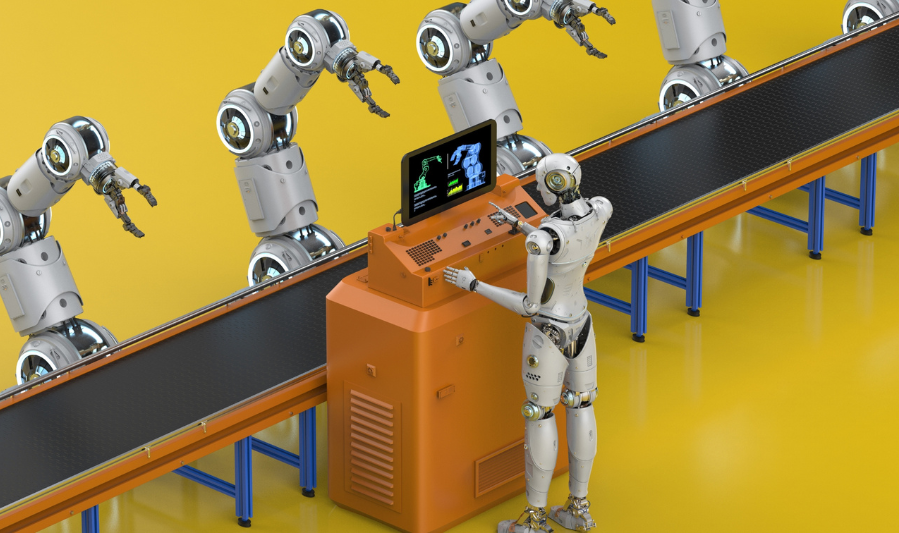
Robotics and automation continue to reshape industries by enhancing efficiency, precision, and safety. In 2026, advances in AI integration, sensor technology, and autonomous systems are enabling robots to perform increasingly complex tasks alongside humans.
Next-Generation Robotics Technologies
Autonomous Vehicles and Delivery Drones
Self-driving cars, trucks, and drones are revolutionizing transportation and last-mile delivery. These systems use AI, computer vision, and real-time mapping to navigate complex environments safely and efficiently.
Industrial Robots
Modern industrial robots are faster, more flexible, and capable of performing intricate tasks such as assembly, welding, and quality inspection. Integration with AI allows predictive maintenance and adaptive operation in dynamic factory settings.
Human-Robot Collaboration
Collaborative robots, or cobots, work safely alongside humans in manufacturing, warehouses, and laboratories. These systems enhance productivity, reduce injury risk, and allow humans to focus on higher-level decision-making.
Robotics Applications Across Industries
Logistics
Automated warehouses, robotic sorting, and delivery drones streamline supply chains, reduce costs, and improve delivery speed.
Manufacturing
Robots enable precision assembly, quality control, and rapid prototyping, supporting smart factories and Industry 4.0 initiatives.
Healthcare
Surgical robots, rehabilitation exoskeletons, and AI-powered diagnostic machines improve patient care and surgical outcomes while augmenting human expertise.
Emerging Robotics Startups and Real-World Applications
- Boston Dynamics – Advanced mobile robots for logistics, inspection, and research.
- Nuro – Autonomous delivery vehicles transforming last-mile logistics.
- Agility Robotics – Legged robots designed for dynamic movement in human environments.
- Stryker & Intuitive Surgical – Robotic systems enhancing surgery and rehabilitation in healthcare.
These startups and companies illustrate how robotics is transitioning from specialized industrial applications to widespread, everyday use.
Biotechnology and Healthcare Innovations
Biotechnology and healthcare are experiencing a profound transformation in 2026, driven by breakthroughs in genetics, AI, and regenerative medicine. These innovations are improving patient outcomes, accelerating drug development, and enabling personalized approaches to treatment.
Cutting-Edge Biotechnology Technologies
Gene Editing and CRISPR
Gene editing technologies like CRISPR-Cas9 allow precise modifications to DNA, opening possibilities for treating genetic disorders, improving crop resilience, and engineering novel therapeutics. Advanced techniques are reducing off-target effects and enhancing precision for clinical applications.
Personalized Medicine
By integrating genomic data, lifestyle factors, and AI analysis, personalized medicine enables treatments tailored to individual patients. This approach improves efficacy, minimizes side effects, and supports predictive healthcare strategies.
AI-Powered Diagnostics and Remote Healthcare
AI algorithms analyze medical imaging, lab results, and patient histories to provide faster and more accurate diagnoses. Coupled with telemedicine platforms and wearable devices, these tools extend healthcare access to remote populations and enable continuous monitoring of health metrics.
Regenerative Medicine and Organ Replacements
Stem cell therapies, tissue engineering, and 3D-printed organs are advancing rapidly. These technologies aim to restore or replace damaged tissues and organs, offering new solutions for chronic diseases, injuries, and organ shortages.
Startups Driving Breakthroughs in Biotech
- Editas Medicine – Developing CRISPR-based therapies for genetic disorders.
- Tempus – Leveraging AI and genomics for personalized cancer treatments.
- Sana Biotechnology – Advancing regenerative medicine and cell therapy.
- AliveCor & Withings – Innovating wearable health tech for continuous monitoring and early detection.
These startups demonstrate the convergence of biotechnology, AI, and digital health in creating next-generation healthcare solutions.
Extended Reality (XR) and the Metaverse
Extended Reality (XR)—encompassing Augmented Reality (AR), Virtual Reality (VR), and Mixed Reality (MR)—is redefining digital interaction in 2026. By blending physical and virtual environments, XR is creating immersive experiences that enhance entertainment, education, collaboration, and enterprise operations.
XR Technologies and Applications
AR, VR, and Mixed Reality in Key Industries
- Gaming: Immersive gameplay with realistic environments, haptic feedback, and interactive storytelling.
- Education: Virtual classrooms, simulations, and AR-enhanced learning materials improve engagement and retention.
- Enterprise: Remote collaboration, virtual design, and training simulations increase efficiency and reduce operational costs.
Immersive Experiences for Collaboration and Social Interaction
XR platforms are enabling lifelike virtual meetings, collaborative design spaces, and social interactions that mimic real-world presence, bridging geographic barriers and enhancing teamwork.
Integration of XR with AI and Blockchain
- AI: Powers adaptive experiences, intelligent avatars, and personalized virtual environments.
- Blockchain: Ensures secure digital asset ownership, NFTs, and decentralized virtual economies within metaverse platforms.
Emerging XR Hardware and Software Trends
- Hardware: Lightweight AR glasses, high-resolution VR headsets, haptic suits, and gesture-based controllers.
- Software: Advanced XR development platforms, cloud-based rendering, and AI-driven environment generation.
XR and the metaverse are increasingly intertwined with AI, blockchain, and IoT, creating a digital ecosystem where virtual and physical realities merge seamlessly.
You may also like to read these posts:
Beginner Workout Plans: A Complete Guide to Start Your Fitness Journey
Breaking Latest Technology News from Around the World
Top Beginner Tech Tutorials for Learning Technology Fast
Complete Step-by-Step Tool Guide for Beginners
Best AI Productivity Tools for Beginners and Professionals
Space Technology and Exploration
Space technology in 2026 is rapidly evolving, driven by private enterprises, startups, and advancements in propulsion, satellite systems, and exploration technologies. The commercialization of space is creating new scientific, economic, and societal opportunities, transforming humanity’s reach beyond Earth.
Private Companies and Startups Leading Space Innovation
- Satellite Technology: Startups like Planet Labs and Spire Global are deploying constellations of small satellites for Earth observation, communications, and climate monitoring.
- Space Tourism: Companies such as Blue Origin and Virgin Galactic are making suborbital tourism accessible, while orbital tourism programs are in development.
- Interplanetary Exploration: Startups and agencies like SpaceX and Astrobotic are advancing missions to the Moon, Mars, and beyond.
Advances in Rocketry and Propulsion
Reusable Rockets
Reusable launch vehicles have reduced the cost of space access dramatically. Innovations in booster recovery, refurbishment, and multi-use design are making space missions more sustainable and economically viable.
Next-Generation Propulsion Systems
Technologies like ion thrusters, nuclear thermal propulsion, and advanced chemical engines are enabling faster, more efficient travel to distant planets and deep-space missions.
Commercial and Scientific Opportunities
- Commercial: Satellite-based internet, asteroid mining, space logistics, and orbital manufacturing are opening new markets and investment opportunities.
- Scientific: Space telescopes, planetary probes, and lunar habitats are expanding our understanding of the cosmos and supporting long-term human presence beyond Earth.
Predictions for the Future of Space Technology
The coming decade will likely see:
- Greater private-public collaboration in space missions
- Expansion of orbital infrastructure such as space stations and refueling hubs
- Advances in space mining and in-orbit manufacturing
- Potential human settlement on the Moon and preparatory missions for Mars
Space technology is no longer confined to government programs; private innovation is democratizing access to space, driving scientific discovery, and enabling new commercial frontiers.
Faqs:
What are the top next-gen technologies in 2026?
The top next-gen technologies in 2026 include artificial intelligence, quantum computing, robotics, biotechnology, extended reality (XR), space technology, green tech, cybersecurity, and IoT.
Which industries will benefit the most from next-gen technologies?
Industries such as healthcare, finance, manufacturing, education, entertainment, and space exploration are expected to see the most significant impact from next-gen technologies.
How can businesses adopt next-gen technologies effectively?
Businesses can adopt next-gen technologies by investing in research and development, collaborating with startups, upskilling employees, and integrating AI, robotics, and IoT into operations.
Where can I stay updated on next-gen technology trends?
Reliable sources include tech news websites, innovation blogs, research labs, startup platforms, professional communities, and industry newsletters.
What challenges do next-gen technologies face in 2026?
Challenges include high costs, regulatory compliance, ethical concerns, cybersecurity risks, workforce skill gaps, and distinguishing hype from practical innovation.
Conclusion
The next-gen technology innovations of 2026 are transforming industries, redefining how we live, work, and interact with the world. From AI and robotics to quantum computing, biotechnology, XR, and green technologies, these advancements are creating new opportunities and reshaping the future.
Staying informed about these technologies allows businesses, professionals, and tech enthusiasts to adapt, innovate, and remain competitive in a rapidly evolving landscape. Embracing next-gen technology 2026 ensures you are ready to leverage the innovations shaping tomorrow