
Introduction
Brief Overview of AI’s Evolution and Impact in 2026
Artificial Intelligence (AI) has rapidly evolved into a transformative technology by 2026.
- Innovations in generative AI, multimodal AI, robotics, autonomous systems, and predictive analytics are changing how we live, work, and create.
- AI is now ubiquitous in business operations, healthcare, creative industries, and robotics, powering efficiency, creativity, and innovation.
Importance of Following AI Breakthroughs
Staying informed about AI developments is essential for:
- Businesses: Adopting AI strategically, staying competitive, and improving ROI
- Tech enthusiasts and developers: Learning new tools, frameworks, and trends
- Professionals: Preparing for AI-driven changes in workflows, operations, and skill requirements
Benefit: Awareness enables smarter decisions, faster innovation, and ethical, responsible use of AI.
Key Industries Influenced by AI
1. Healthcare
- Predictive diagnostics, personalized treatment, drug discovery, and operational efficiency
2. Enterprise
- AI-powered analytics, automation, decision-making, virtual assistants, and supply chain optimization
3. Creative Industries
- Generative AI for text, images, video, music, and interactive content creation
4. Robotics and Autonomous Systems
- Self-driving vehicles, drones, industrial robots, and human-AI collaboration technologies
What Readers Will Gain from This Guide
By reading this guide, you will:
- Understand current AI technologies and breakthroughs in 2026
- Discover real-world applications and industry impacts
- Learn about emerging AI trends, ethical considerations, and governance
- Gain insights to adapt skills, strategies, and innovation approaches in an AI-driven world
Generative AI Breakthroughs
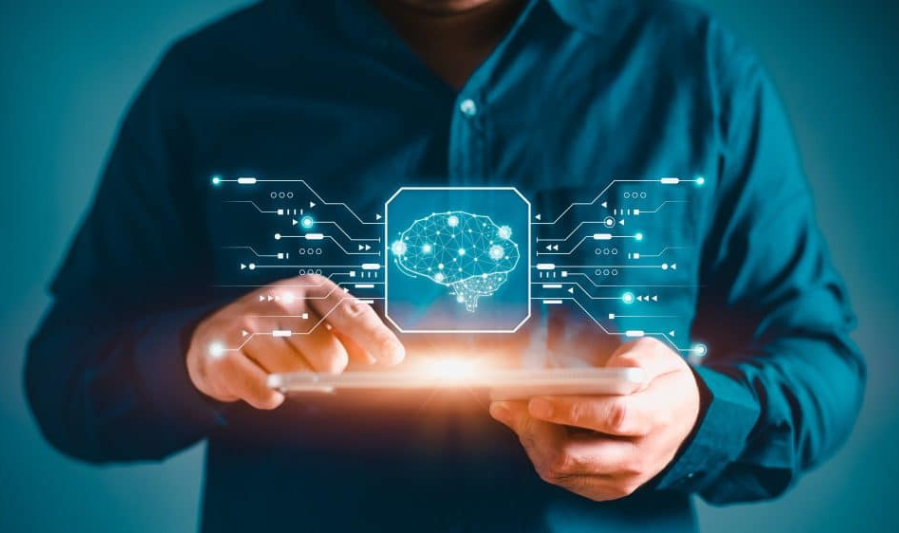
Definition and Explanation of Generative AI
- Generative AI refers to AI systems that create new content by learning patterns from existing data.
- Unlike traditional AI that classifies or predicts, generative AI can produce text, images, videos, music, and even software code.
- Works by analyzing large datasets to generate outputs that mimic human creativity and reasoning.
Simple Example: An AI model can generate an original poem, create artwork, compose music, or write a functioning software script based on user prompts.
Latest AI Models and Improvements in 2026
- Language Models: GPT-5, GPT-5 Turbo – advanced text generation with improved reasoning and contextual understanding
- Image Models: DALL·E 3, Stable Diffusion 3 – realistic and creative image generation
- Video Models: VideoGen AI – short video creation from text prompts
- Music Models: AI composers capable of producing songs across multiple genres
- Code Models: CodeGen AI – automated code generation, debugging, and software development
Trends in 2026:
- Multi-modal AI combining text, image, audio, and video generation
- Reduced bias and improved safety in outputs
- Faster, more energy-efficient model training
Applications of Generative AI
Text
- Articles, social media content, reports, scripts
Images
- Digital artwork, advertising creatives, product design
Video
- Short films, explainer videos, marketing clips
Music
- Original compositions, soundtracks, jingles
Software Code
- Automated programming, debugging, software module generation
Impact: Accelerates content creation, reduces cost, and enables rapid experimentation.
Real-World Examples of Companies Leveraging Generative AI
| Sector | Company/Startup | Application |
|---|---|---|
| Content & Marketing | Jasper, Copy.ai | AI-generated copy, blogs, and marketing content |
| Visual Arts | OpenAI (DALL·E), Stability AI | AI image creation for advertising and design |
| Video & Entertainment | Runway | AI-powered video editing and short video creation |
| Music | OpenAI Jukebox | AI-composed songs and soundtracks |
| Software Development | GitHub Copilot, CodeGen AI | AI-assisted coding and software development |
Lesson: Generative AI enables companies to innovate faster and deliver personalized experiences at scale.
Ethical Considerations
- Deepfakes: Realistic AI-generated videos/images that can be misused
- Misinformation: AI-generated fake news or misleading content
- Copyright & Ownership: Questions about legal rights over AI-generated content
- Bias & Fairness: Outputs may reflect biases in training data
- Responsible AI Use: Transparency, content watermarking, moderation, and governance
Mitigation Strategies:
- Implement AI audits for bias and safety
- Use watermarks to identify AI-generated content
- Follow ethical AI policies for deployment and governance
AI in Healthcare
Predictive Diagnostics and Early Disease Detection
- AI analyzes medical imaging, lab results, and patient history to identify diseases earlier than traditional methods.
- Applications include:
- Detecting cancer from MRI, CT, or X-ray scans
- Cardiovascular risk prediction
- Early detection of neurological and metabolic disorders
Impact: Timely diagnosis improves patient outcomes, reduces long-term treatment costs, and enables preventative care.
Personalized Treatment Plans and AI-Assisted Decision-Making
- AI tailors treatments based on individual genetics, lifestyle, and medical history.
- Examples:
- Optimized chemotherapy or radiation plans for cancer patients
- Predicting which medications will be most effective
- Monitoring patient progress with wearable data and AI insights
Benefit: Enhances treatment effectiveness and minimizes side effects.
AI-Driven Drug Discovery and Clinical Trial Acceleration
- AI accelerates drug development by:
- Predicting molecular interactions and potential drug efficacy
- Simulating toxicity and side effects before human trials
- Identifying promising compounds for clinical trials
Outcome: Shortens development timelines, lowers costs, and increases success rates.
Example: AI-designed molecules for rare diseases and vaccines have reached clinical trials faster than traditional methods.
Hospitals and Clinics Using AI to Optimize Operations
- AI helps medical institutions streamline operations and improve patient care:
- Scheduling staff and predicting patient load
- Automating medical imaging analysis
- Chatbots for patient queries and appointment management
Examples:
- Mayo Clinic and Cleveland Clinic implementing AI for diagnostic assistance and operational planning
- Hospitals using AI to predict ICU demand and optimize resource allocation
Statistics: Investment Growth, Adoption Rates, and Outcomes in 2026
- Global AI healthcare market projected to exceed $50 billion in 2026
- 60%+ of hospitals worldwide using AI for diagnostics, monitoring, or workflow optimization
- Studies show 15–30% improvement in patient outcomes when AI-assisted predictive diagnostics are applied
- Investment focus: predictive analytics, drug discovery, imaging, and operational AI tools
Takeaway: AI is transforming healthcare from reactive to proactive, personalized, and efficient, benefiting patients, providers, and researchers alike.
Robotics and Autonomous Systems
Self-Driving Vehicles: Commercial, Delivery, and Public Transport
- AI-powered vehicles are transforming transportation:
- Commercial fleets: Long-haul autonomous trucks
- Delivery services: Last-mile delivery vans
- Public transport: Self-driving buses and shuttles
Impact:
- Reduces accidents caused by human error
- Optimizes routes and fuel consumption
- Increases accessibility and efficiency
Example Companies: Waymo, Cruise, Aurora, Tesla
AI-Powered Drones in Logistics, Agriculture, and Surveillance
- Applications:
- Logistics: Drone delivery of goods and medical supplies
- Agriculture: Crop monitoring, precision spraying, yield prediction
- Surveillance & Monitoring: Infrastructure inspection, wildlife tracking, disaster response
Impact: Enhances productivity, safety, and data-driven decision-making.
Example Companies: DJI, Zipline, Skydio
Industrial and Warehouse Robots for Automation
- Applications:
- Manufacturing: Automated assembly lines and quality inspection
- Warehousing: Material handling, packing, sorting
- Maintenance: Predictive equipment maintenance using AI
Impact: Increases efficiency, reduces errors, and lowers operational costs.
Example Companies: Boston Dynamics, FANUC, Amazon Robotics
Human-AI Collaboration Technologies in Workplaces
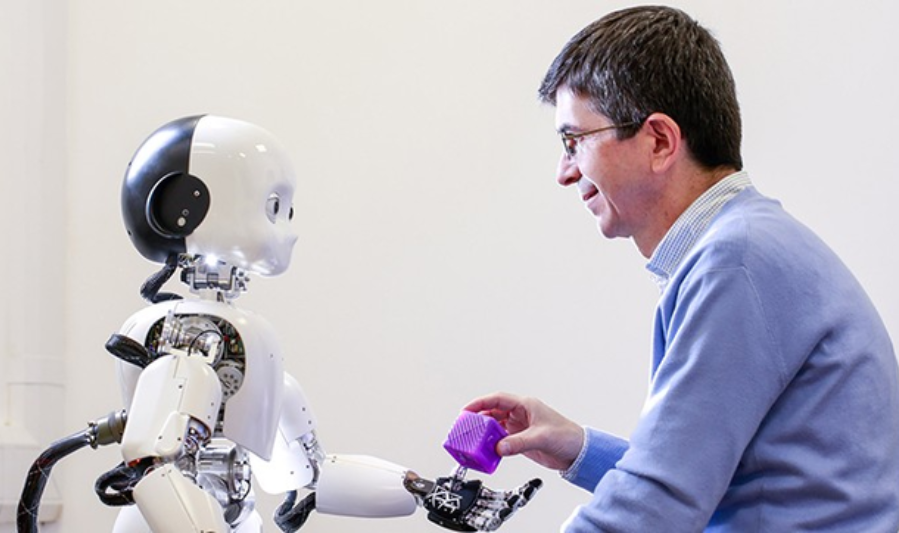
- Cobots (Collaborative Robots): Work safely alongside humans in factories, hospitals, and offices
- AI-assisted decision support: Helps humans in surgery, logistics, and inspections
- Benefit: Combines human judgment with AI efficiency for safer, more productive workplaces
Trend: AI augments rather than replaces humans, increasing workplace safety and output.
Examples of Companies Achieving Breakthroughs in Robotics
| Sector | Company/Startup | Breakthrough/Application |
|---|---|---|
| Autonomous Vehicles | Waymo, Cruise, Aurora | Self-driving cars and delivery vehicles |
| Drones & UAVs | DJI, Zipline, Skydio | Logistics, precision agriculture, inspection |
| Industrial Robotics | Boston Dynamics, FANUC | Automated assembly, warehousing, cobots |
| E-commerce & Warehouses | Amazon Robotics | Smart warehouses with AI-guided robots |
Takeaway: Robotics and autonomous systems are driving efficiency, safety, and innovation across multiple industries, from logistics to manufacturing and transport.
AI in Enterprise and Business
AI-Driven Analytics, Automation, and Decision-Making
- Enterprises leverage AI to analyze large datasets, automate repetitive tasks, and support strategic decisions.
- Applications:
- Predictive analytics for sales, revenue, and customer behavior
- Automated reporting, invoicing, and workflow optimization
- AI-driven insights to enhance operational efficiency
Impact: Reduces human error, improves productivity, and enables faster, data-driven decisions.
Smart Virtual Assistants and Chatbots for Enhanced Customer Support
- AI chatbots and virtual assistants provide 24/7 support to customers and employees.
- Customer applications:
- Handling inquiries, complaints, and product recommendations
- Personalized support at scale
- Internal applications:
- Assisting employees with HR, IT, and operational workflows
Benefit: Improves response times, reduces support costs, and enhances user satisfaction.
Example Tools: ChatGPT Enterprise, IBM Watson Assistant, Microsoft Copilot
AI Applications in Supply Chain, Marketing, and Operations
- Supply Chain:
- Predicting demand and inventory needs
- Optimizing delivery routes and warehouse management
- Marketing:
- Personalized campaigns and customer segmentation
- Automated content generation and social media targeting
- Operations:
- Resource allocation, risk management, and process automation
Impact: Streamlines operations, increases efficiency, and maximizes ROI.
Case Studies: Businesses Successfully Implementing AI
| Industry | Company | AI Application |
|---|---|---|
| Retail & E-commerce | Amazon, Alibaba | Predictive analytics, inventory optimization |
| Finance | JPMorgan Chase, BlackRock | Fraud detection, portfolio management |
| Manufacturing | Siemens, GE | Predictive maintenance, production automation |
| Marketing & CRM | Salesforce, HubSpot | AI-driven campaigns and customer insights |
Lesson: Strategic AI integration improves performance and gives companies a competitive edge.
Focus on Scalable Solutions with Measurable ROI
- Successful enterprise AI focuses on:
- Real business problems: Start with projects solving tangible pain points
- Scalability: Deploy solutions across departments or globally
- Measurable results: Track KPIs like cost savings, revenue growth, and efficiency
Tips for Enterprises:
- Begin with pilot projects to validate outcomes
- Use dashboards and analytics to monitor AI performance
- Combine AI automation with human oversight for optimal results
Takeaway: Scalable, well-monitored AI solutions provide efficiency, innovation, and long-term business value.
Multimodal AI and Next-Generation Models
Definition and Importance of Multimodal AI
- Multimodal AI refers to models that process and understand multiple types of data simultaneously, such as text, images, audio, and video.
- Importance:
- Combines diverse sources of information for richer understanding
- Enables AI to perform complex tasks requiring multiple modalities
- Expands the range of applications beyond single-data-type models
Example: An AI assistant that can read text, analyze images, and interpret spoken commands simultaneously.
How AI Models Handle Text, Images, Audio, and Video Simultaneously
- Multimodal models are trained on datasets containing multiple data types.
- Key techniques:
- Cross-modal embeddings: Convert different data types into a shared representation space
- Attention mechanisms: Focus on relevant parts of each modality for context-aware outputs
- Fusion layers: Combine insights from different modalities to produce coherent predictions or content
Result: AI can understand context and relationships across modalities, enabling richer responses and predictions.
Applications of Multimodal AI
Real-Time Translation
- Translates spoken or written content while interpreting gestures or images
- Enables seamless cross-lingual communication
Content Moderation
- Detects inappropriate content across text, images, and videos
- Used in social media, streaming platforms, and collaborative tools
Creative Generation
- Produces multimedia outputs like AI-generated videos, music with visuals, or interactive storytelling
- Supports marketing, education, and entertainment industries
Other Applications: Virtual assistants, AR/VR interfaces, autonomous systems, and smart healthcare diagnostics
Improved Model Efficiency, Speed, and Context Awareness
- Next-generation multimodal models in 2026 offer:
- Faster inference: Reduced latency for real-time applications
- Energy-efficient training: Smaller, optimized models with lower computational cost
- Better context awareness: Understanding relationships across data types for more accurate outputs
- Adaptive learning: Ability to generalize across unseen combinations of modalities
Impact: Enhances productivity, creative capabilities, and AI usability in real-world environments.
AI Ethics, Governance, and Responsible Innovation
Importance of Ethical AI in 2026
- AI systems are deeply integrated into business, healthcare, finance, and public services, making ethical considerations critical.
- Why it matters:
- Ensures AI decisions are fair, unbiased, and safe
- Builds trust with users, regulators, and stakeholders
- Prevents legal, reputational, and societal risks
Example: Deploying AI in hiring or loan approvals without fairness checks can lead to discrimination and regulatory penalties.
Bias Detection, Transparency, and Accountability Frameworks
- Bias Detection: Tools and audits identify biases in datasets and model outputs.
- Transparency: Explainable AI (XAI) techniques allow humans to understand AI decisions.
- Accountability: Clearly defines who is responsible for AI outcomes (developers, deployers, organizations).
Impact: Reduces unintended harm and ensures ethical AI adoption aligns with societal norms.
Regulatory Guidelines and Government Policies
- Global and regional frameworks in 2026 include:
- EU AI Act: Regulates high-risk AI applications in healthcare, finance, and critical infrastructure
- US AI Bill of Rights: Guidelines for ethical AI use in public and private sectors
- ISO/IEC AI Standards: International guidelines for AI safety, quality, and governance
Purpose: Protect citizens while allowing innovation in AI development and deployment.
How Ethical AI Creates a Competitive Advantage
- Organizations adopting ethical AI can gain:
- Customer trust and loyalty through responsible practices
- Regulatory compliance, reducing fines and legal risks
- Market differentiation, positioning themselves as leaders in responsible innovation
Example: Companies using transparent AI for financial decisions or healthcare diagnostics are more likely to attract clients and partners.
Challenges in Balancing Innovation with Responsibility
- Rapid AI development can outpace regulations, creating tension between:
- Speed of innovation vs. ethical deployment
- Performance and efficiency vs. fairness and safety
- Commercial benefits vs. societal responsibility
Solutions:
- Implement internal AI ethics boards
- Conduct regular audits and risk assessments
- Collaborate with regulators and industry bodies for guidance
Takeaway: Ethical AI is not just a moral imperative—it’s a strategic advantage that ensures long-term sustainability, trust, and innovation.
You may also like to read these posts:
Beginner Workout Plans: A Complete Guide to Start Your Fitness Journey
Breaking Latest Technology News from Around the World
Top Beginner Tech Tutorials for Learning Technology Fast
Complete Step-by-Step Tool Guide for Beginners
Best AI Productivity Tools for Beginners and Professionals
Emerging AI Trends
Green AI: Energy-Efficient and Environmentally Conscious Models
- Definition: AI models designed to minimize energy consumption during training and deployment.
- Techniques:
- Model compression and pruning
- Optimized hardware and low-power architectures
- Cloud computing powered by renewable energy
- Impact: Reduces carbon footprint of AI, making large-scale AI adoption sustainable
Example: AI models used for image recognition or NLP tasks that are 50% faster and consume 40% less energy.
AI for Climate and Sustainability Solutions
- AI is applied to tackle global environmental challenges:
- Predicting and mitigating extreme weather events
- Optimizing energy usage in smart grids and industrial systems
- Monitoring deforestation, wildlife, and pollution
- Supporting precision agriculture and sustainable farming
Impact: Enhances environmental monitoring, improves resource efficiency, and supports global sustainability initiatives.
AI-Driven Cybersecurity: Automated Threat Detection and Prevention
- AI systems detect and respond to cyber threats in real time.
- Applications include:
- Network intrusion detection
- Malware identification and prevention
- Fraud detection in finance and banking
- Benefit: Reduces human error, improves response time, and strengthens enterprise security
Example Companies: Darktrace, Palo Alto Networks, CrowdStrike
Human-AI Collaboration Platforms: Enhancing Productivity and Creativity
- Platforms that allow humans and AI to work together seamlessly:
- Co-creation tools for writing, design, and code
- AI-assisted decision-making in business and healthcare
- Virtual assistants augmenting human productivity
Impact: Combines human creativity and judgment with AI efficiency, leading to better outcomes and innovation
Predictions for AI Adoption Across Industries in 2026–2027
- High-growth sectors: Healthcare, finance, enterprise, robotics, creative industries, cybersecurity
- Trends:
- Green AI will become a standard requirement for large-scale AI deployments
- AI-driven sustainability solutions will expand across agriculture, energy, and environmental monitoring
- Human-AI collaboration platforms will reshape workplaces, boosting productivity and innovation
- Adoption expected to grow 20–30% annually in enterprise and industrial applications
Takeaway: Emerging AI trends are driving sustainable, secure, and collaborative innovation, transforming industries while addressing global challenges.
Faqs:
What are the most significant AI breakthroughs in 2026?
In 2026, the most notable breakthroughs include generative AI, multimodal AI models, autonomous robotics, AI-driven healthcare solutions, and enterprise automation technologies.
How is AI transforming healthcare in 2026?
AI is enabling predictive diagnostics, personalized treatments, drug discovery, and hospital operations optimization, making healthcare faster, more accurate, and cost-effective.
Which industries are benefiting the most from AI breakthroughs?
Healthcare, enterprise businesses, robotics, creative industries, and finance are leading adopters, leveraging AI for efficiency, innovation, and improved decision-making.
Are AI breakthroughs safe and ethical to use?
Yes. Companies are implementing ethical AI frameworks, bias detection, transparency measures, and compliance with government regulations to ensure responsible and safe AI usage.
What opportunities do AI breakthroughs create for businesses and professionals?
AI breakthroughs offer opportunities for automation, innovation, cost reduction, productivity improvement, and new product or service development, helping businesses and professionals stay competitive in 2026.
Conclusion
The artificial intelligence breakthroughs of 2026 are reshaping industries, driving innovation, and redefining what is possible with technology. From generative AI and multimodal models to autonomous robotics and healthcare innovations, AI is no longer just a tool—it is a strategic driver of progress and efficiency.
While these breakthroughs offer immense opportunities for businesses and professionals, they also bring challenges such as ethical considerations, bias, and the need for responsible governance. Staying informed about the latest AI developments is essential for anyone looking to harness the power of AI responsibly and effectively.